Psychiatry Long Island

Please upgrade to the latest version of Flash Player.

Click here if you already have Flash Player installed.

TMS

Transcranial Magnetic Stimulation (TMS) Treatment Long IslandTranscranial Magnetic Stimulation (TMS) is a non-invasive treatment for Depression offered at South Shore Nueropsychiatric Center. TMS uses magnetic stimulation of the brain to help control mood in adults with major Depression. The procedure was approved by the U.S. Food and Drug Administration in October 2008 after more than 10 years of clinical investigation in patients who failed to achieve satisfactory improvement from one course of Pharmacotherapy (medication). For this reason, TMS is particularly helpful for people who have not experienced significant relief from antidepressant medications or have difficulty with their side effects.

How Does TMS work?

Transcranial Magnetic Stimulation (TMS) Treatment Long IslandTMS uses focused magnetic pulses to non-invasively stimulate the brain in the prefrontal cortex (the region of the brain associated with mood regulation). During a TMS treatment, a clinician gently places a magnetic coil against one side of a patient's scalp. The magnetic fields penetrate approximately two to three centimeters beneath the coil directly into the brain to produce electrical currents. These currents activate cells within the brain that are thought to release neurotransmitters, which play a role in mood regulation. Since Depression is believed to be caused by an imbalance of chemicals in the brain, TMS helps restore balance and relieve the symptoms of Depression. TMS stimulates the area of the brain that is thought to influence mood and is usually hypoactive in patients suffering from Depression.

TMS Procedure

During the TMS Therapy procedure, a coil device is placed over the patient's head to deliver magnetic pulses to the brain. These pulses are thought to cause electrical changes within the neurons of the left prefrontal cortex, which is the part of the brain that regulates mood.

This procedure is completely painless and noninvasive, performed similarly to an MRI scan of the brain. Each treatment sessions takes about 30 minutes to perform, and patients can resume their regular activities immediately after each session. To achieve effective results, patients will need to undergo multiple visits each week for three to six weeks, depending on their individual condition.


Through a treatment coil, the NeuroStar TMS Therapy system generates
highly concentrated, magnetic fields which turn on and off very rapidly.
These magnetic fields are the same type and strength as those produced
by a magnetic resonance imaging (MRI) machine.

The Advantages of TMS

TMS requires no anesthesia or sedation and patients are awake and alert during the procedure. Because no medications are administered, there are no systemic effects or cognitive after-effects (memory loss and ability to concentrate); therefore, patients can return immediately to
regular activity.

Treatment

Dr. Jacob's Credentials
NeuroStar TMS Therapy® Patient Education Video
Patients typically receive 20 to 30 treatments over four to six weeks, five times per week; with each treatment lasting approximately 37 minutes. The course of treatment varies according to each individual. There also may be a taper phase. An initial assessment will determine the appropriate dose of the magnetic pulse and the exact area of the brain the coil should target. As treatment progresses, the clinician will conduct periodic re-evaluations of the dose level and coil placement.

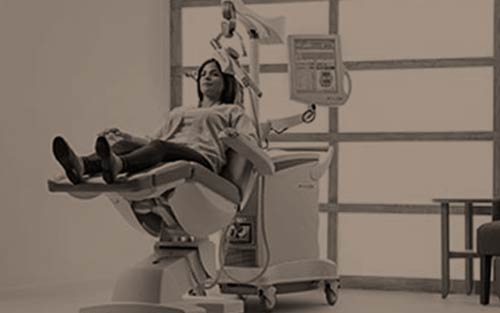
During a treatment session, the patient sits in a comfortable reclining chair similar to that found in a dentist's office. A headset is applied to deliver the magnetic stimulation. Ear plugs are provided to decrease the loud clicks associated with each magnetic pulse and the patient is given the option of watching TV. During the procedure, the patient is monitored continuously to ensure correct positioning and comfort level.

South Shore Neuropsychiatric Center pioneered the technique of engaging the patient in Cognitive/Supportive Psychotherapy during the course of TMS treatments, administered by a Licensed Mental Health Counselor.

Are There Risks and Side Effects with TMS?

More than 10,000 treatments were safely performed during clinical trials. Patients reported no side effects like those associated with antidepressant medication (weight gain, dry mouth, drowsiness, sexual side effects, etc.), and no cognitive side effects. Scalp discomfort during the procedure is the most common side effect. TMS should not be used for patients with implanted metallic devices that include metal plates in the skull or aneurysm coils, clips or stents. Special precautions are recommended for individuals with implants, such as pacemakers and implantable cardioverter defibrillators.

Is TMS Covered by Insurance?

Both private and public insurers are determining eligibility for TMS on an individual basis. However, until TMS is accepted more widely as a medically necessary treatment, insurance coverage will most likely not be authorized. Patients should work directly with their insurers to determine coverage. Patients can then work with a Patient Account representative to arrange payment schedules and to obtain assistance in applying for reimbursement of out-of-pocket expenses from their insurers.

Contact

For further information or a referral for a free initial consultation, please call (516) 295-4TMS


Please visit our news website longislandtmsnews.com for the latest research and media publications on TMS.

back to the top